
According to MIT Technology Review, David Sinclair, a biologist and geneticist specializing in anti-aging research at Harvard Medical School, plans to have volunteers take a drug mixture to demonstrate the potential for reversing human aging. If conducted, this trial would mark a significant development in the race to master reprogramming technology based on a discovery made 20 years ago regarding genes that can transform mature cells into stem cells. The age-reversing effect occurs through resetting molecular control on DNA. Earlier this January, Life Biosciences, one of Sinclair’s companies in Boston, was licensed to test the drug ER-100 in a study involving 18 adults next year. ER-100 is designed to rejuvenate cells in the optic nerve, helping them to function again and restore vision. Sinclair’s new trial is bolder as it uses an oral reprogramming drug to promote rejuvenating effects throughout the body rather than focusing on a single area. This chemical reprogramming method emphasizes using drugs to mimic the effects of genes in embryos. The drug compounds can travel through the bloodstream, reaching most or all cells in the human body.
Sinclair has declined to disclose the exact components of the drug code-named SL-100. However, he has previously published laboratory studies on a “youth-reversal mixture,” blending powerful chemicals with over-the-counter supplements and drugs. Sinclair stated that his lab has been searching for compounds that promote whole-body rejuvenation and has begun using AI to enhance the oral drug they are developing.

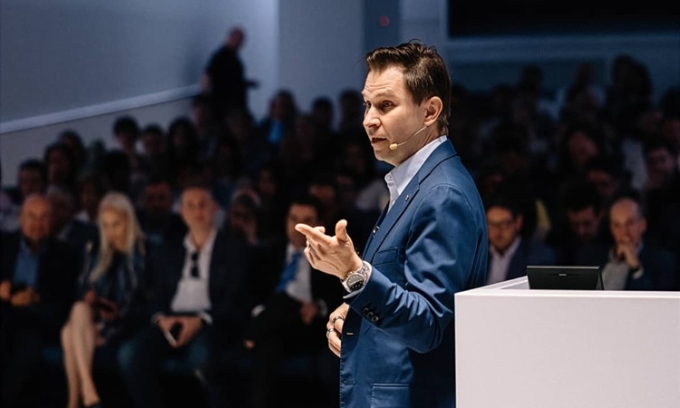
Biologist and geneticist David Sinclair. Photo: University of Nicosia
Some experts express caution, stating that the chemical processes used in the laboratory may not be truly effective. “These chemicals need to be used at very high concentrations for cell reprogramming,” emphasized Sergiy Velychko, founder of the reprogramming company Soxogen in Boston. Sinclair himself is often criticized by other scientists for making many claims without compelling evidence. Part of the issue lies in the lack of consensus among researchers on how to measure aging and rejuvenation levels.
Sinclair’s research team is participating in the Healthspan competition organized by the XPrize Foundation, a global competition lasting seven years aimed at revolutionizing human aging. According to Jamie Justice, the competition director, the judging panel is selecting 10 finalist teams from 65 registered participants. Sinclair’s team joined the competition relatively late and needs to transition to large-scale human trials this year. The finalists for the Healthspan competition will be announced in August. The XPrize Foundation will award cash prizes to teams that can return humans to a younger age through improvements in immune function, cognition, and muscle. The prize will go to the team that can demonstrate rejuvenation equivalent to 10 years or more after one year of treatment.