
Prinano has announced the production of 20 cm optical chip wafers in collaboration with Shenzhen Litra Technology, entirely without using DUV. Instead, the company employs a vacuum air cushion nanoimprint lithography (NIL) system called PL-AS, which reduces production costs to one-tenth of traditional DUV-based processes.
According to Tom’s Hardware, this could be a breakthrough that helps China reduce its dependence on ASML machinery. ASML is the world’s largest chip-making equipment manufacturer by market capitalization and is a leading company in DUV technology used to manufacture chips for a wide range of products from smartphones to automobiles and defense equipment. According to Nikkei Asia, the Dutch company even exclusively produces extreme ultraviolet (EUV) lithography machines, which are used by major chip companies like TSMC, Samsung, and Intel to create the most advanced processors and memory chips in the world.
Modern chips are typically produced using DUV or EUV machines that project electronic circuit patterns onto silicon wafers using light. These machines contain some of the most complex optical systems and can cost hundreds of millions of dollars.
Nanoimprint lithography works differently. Instead of projecting patterns with light, nano structures are pressed into a special optical barrier material, essentially stamping ultra-small circuit patterns directly onto the wafer surface.
Nanoimprint lithography has long been viewed as a potential alternative to traditional lithography due to its ability to reduce costs and print patterns with extremely high resolution. However, this technology has faced challenges for widespread application in chip manufacturing due to concerns about yield, defect rates, and mold wear.
Founded in 2017, Prinano has spent years overcoming these limitations by developing its own “ecosystem” of nanoimprint lithography. The company claims that its PL-AS vacuum air cushion nanoimprint lithography platform integrates wafer-level pressure control technology, custom dual-layer molding materials, and proprietary processes that can create features smaller than 10 nm.

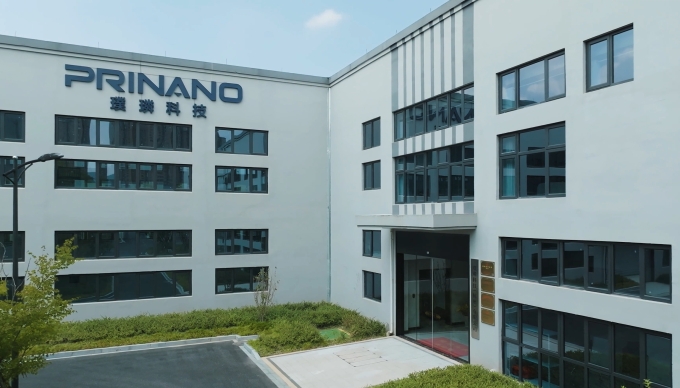
Prinano Company in China. Photo: Prinano
The new achievement reflects China’s efforts in the face of challenges posed by U.S. sanctions. Due to restrictions on access to advanced DUV and EUV machines from ASML, companies in China have had to seek alternative solutions, ranging from advanced packaging technology to new chip architecture and manufacturing methods. Last month, Huawei unveiled a new LogicFolding chip architecture that enables the development of high-performance processors without relying on EUV.
According to Tom’s Hardware, while Prinano claims that the technology has been validated for mass production, it has not yet disclosed actual production volumes, yield quality rates, defect densities, delivery data, or results from third-party independent verification. These key metrics are essential to determine whether the new technology is commercially viable or merely technically feasible.
Thu Thảo tổng hợp