
Contributing ideas to the Ministry of Science and Technology’s project on building infrastructure for the national strategic technology research, scientists believe that this is a necessary step, but lessons must be learned from the “first generation” national key laboratories – 16 laboratories that were invested in during the 2000s.
Specifically, the new laboratory system needs to have mechanisms for long-term task assignments, annual operating budgets, and more flexible personnel and investment procurement cooperation mechanisms.
“Our previous investments were too short-term – investing in laboratories, and then supporting according to different contexts and phases – it did not form a comprehensive investment package, making it very difficult for key laboratories to maintain operations,” said Associate Professor Dr. Nguyen Thanh Bang, Deputy Director of the Vietnam Institute of Irrigation Science, which manages the National Key Laboratory on River and Coastal Dynamics (IHRCE), at the seminar “Report and exchange, propose organizational models, management, and operation of national research, testing, and key laboratories,” on June 2.

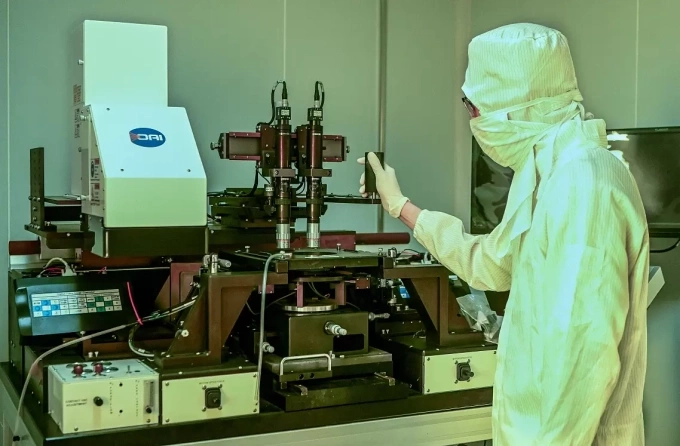
PhD students operate on the photolithography system at the Nano and Energy Center, Faculty of Physics, University of Natural Sciences, Vietnam National University, Hanoi. Photo: Giang Huy
IHRCE is one of the 16 national key laboratories currently in operation, established in 2008 with the mission of researching rivers, estuaries, coastal areas, hydraulic engineering, and disaster prevention and mitigation.
Associate Professor Bang stated that the current key laboratories are maintained by receiving research tasks, supporting agencies, localities, and enterprises. The “chasing” of ordered tasks makes it difficult for the laboratory to maintain a consistent research direction.
Therefore, he hopes that the new generation of laboratories will “have a comprehensive investment package, including initial investment, maintenance and upgrade investment, and operation to maintain a continuous task, pursuing a specific technology or strategic product,” he said. Additionally, Associate Professor Bang noted the need for a specific mechanism to monitor the tasks of laboratories based on scientific publications and patents.
Professor Dr. Mai Thanh Phong, President of Ho Chi Minh City University of Technology – which manages two national key laboratories on materials and system control, also believes that the organization plan for new key laboratories needs to clarify the sources of operational funding. Currently, the project report from the Ministry of Science and Technology anticipates allocating resources with 40% for equipment and infrastructure investment, 30% for human resource development, 20% for operation and maintenance, and 10% for technology upgrades and innovation reserves; no investment will be approved without ensuring the minimum operational budget for the first five years.
“It is possible to separate the equipment investment part, with long-term proposals professionally to demonstrate the necessity of this investment, and the part ensuring annual funding. Currently, the annual budget for national key laboratories is very limited,” Professor Phong stated.
Specifically, representatives from Ho Chi Minh City University of Technology believe that operational costs should be separated from scientific tasks to cover regular expenses such as operations, salaries for experts, researchers, and technicians. The development of human resources for national strategic technology, a function of key laboratories, will belong to the scientific task budget.

National Key Laboratory of Enzyme and Protein Technology, University of Natural Sciences, Vietnam National University, Hanoi. Photo: VNU
Associate Professor Dr. Nguyen Quang Huy, Director of the National Key Laboratory of Enzyme and Protein Technology, believes that a more open mechanism for personnel in laboratories is needed, especially in the context of changing technologies that may require expansion into other specialties to meet research demands.
Professor Phong also noted a current obstacle that the new project needs to address is the coordination mechanism between laboratories and enterprises. Currently, there are issues with the mechanism of using and managing public assets. “If there is participation from enterprises, what will the form be, and when they contribute, what rights do they have to use it,” Professor Phong raised the question.
According to Deputy Minister Le Xuan Dinh, the Ministry of Science and Technology is developing a system of national research, testing, and key laboratories in the direction of a national infrastructure development program in research and innovation, not just an investment project.
The Ministry’s leadership assessed that one-time investment solutions are no longer suitable with the current pace of technological change, so consideration will be given to multiple investments for a key laboratory, alongside operating, maintenance, and upgrade costs.
Deputy Minister Le Xuan Dinh also stated that the project “Developing the system of national research, testing, and key laboratories, focusing on strategic technology” currently addresses investments, budget use, human resources, and public assets comprehensively. “The Ministry of Science and Technology is also proposing to build a separate decree for this laboratory project,” he said, adding that this approach will definitively resolve the obstacles related to the national key laboratory model, building effective operational infrastructure for strategic technology research.
Transforming the mindset of operating national key laboratories
Restructuring key laboratories, mastering strategic technology
Transforming the mindset of operating national key laboratories
Restructuring key laboratories, mastering strategic technology