International Cooperation Shortens the Journey from Lab to Market – VnExpress Newspaper

South Summit 2026, co-hosted by IE University from June 3-5 in Madrid, Spain, is one of Europe’s most influential startup and innovation forums. On the sidelines of the event, Ms. Patricia Sánchez Pacheco, an expert in charge of the cooperation program with Vietnam at the Centre for the Development of Industrial Technology CDTI – a public agency under the Spanish government, shared insights on fostering technology-based startups and commercializing research outcomes.

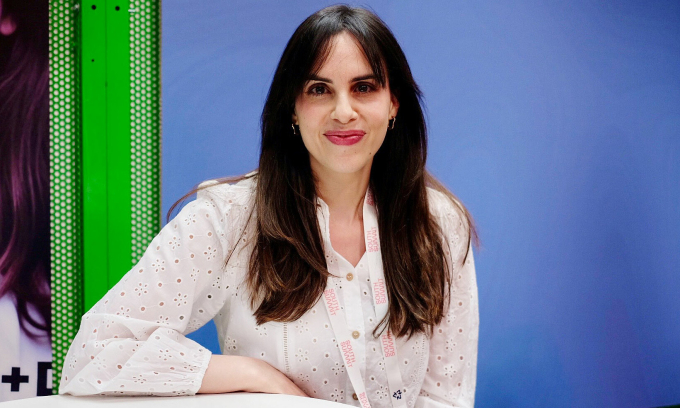
Patricia Sánchez Pacheco, expert in charge of the cooperation program with Vietnam at the Centre for the Development of Industrial Technology CDTI. Photo: Chau An
Patricia Sánchez Pacheco, expert in charge of the cooperation program with Vietnam at the Centre for the Development of Industrial Technology CDTI. Photo: Chau An
– With a mission to bridge the gap between innovation and market reality, how does CDTI support the transformation of research results into commercially viable products and businesses?
– Many technological breakthroughs originate from basic research, but require significant capital and stages of prototyping, testing, and validation before they can become commercial products. We provide grants or loans at each development milestone of a project, helping to support these intermediate stages.
CDTI also leverages international technology cooperation to enhance the effectiveness of innovation and increase the competitiveness of domestic businesses. We promote R&D projects in collaboration with foreign partners, help businesses access international innovation networks, and facilitate cross-border technology partnerships, thereby enabling businesses to leverage complementary international expertise, share resources, and exchange knowledge.
– Could you describe CDTI’s process of support from the initial idea stage to becoming a successful commercial product?
– I want to emphasize the role of CDTI’s “seed capital” program NEOTEC in supporting startups and spin-off companies (formed from research projects or technological products in university laboratories) in transitioning from the initial idea stage to commercialization.
This is one of Spain’s most important public support tools for promoting technology-based entrepreneurship. The program focuses on companies whose business strategy or operations are based on the in-depth application of scientific and technical knowledge. To be eligible, companies must demonstrate that technological development is their core source of competitive advantage. This helps ensure that public resources are allocated to highly technological and high-growth potential innovation projects.
A highlight of NEOTEC is its role in promoting knowledge transfer from universities and public research organizations to the market. By supporting the establishment of technology companies originating from scientific research results, the program helps bridge the gap between knowledge creation and its application in business practice.
The scale of the program’s support is also noteworthy. In recent funding calls, NEOTEC funds 70% of eligible project costs, with a maximum of 250,000 Euros per company. Notably, projects that hire PhD researchers can receive up to 85% of eligible costs, thereby encouraging startups to integrate highly qualified scientific human resources into their business development process.
– In your opinion, what role should the State play in bridging the gap between the lab and the market, especially in high-risk technology fields?
– In fields with long development times and uncertain profitability, governments and state agencies can play a role in mitigating risks, helping businesses pursue innovations that the private sector might deem too risky to invest in. Support tools can include co-funding programs, public-private partnership models, credit guarantee mechanisms, or R&D project funding programs.
However, intervention by state agencies also comes with challenges. Public funding can lead to bureaucracy, reduce market competitive pressure, and create dependency on state support. In the long run, this can negatively affect the innovation capacity and operational efficiency of the market.
– What are the core factors that help a potential research project become a successful business in the market?
– First, a clear and validated market need must be identified. Many research projects are technically impressive but fail commercially because they do not address a sufficiently urgent, large, or economically valuable problem.
We also need to mention technology transfer capability, which is the ability to transform a scientific prototype in the lab into a reliable, scalable, and cost-effective product or service.
Next is strong entrepreneurial leadership and a suitable research team, in other words, a combination of business skills and scientific competence. Successful spin-off companies often include founding scientists and individuals with experience in business development, market entry, and fundraising.
An indispensable factor is timely access to finance. Initial research stages can be supported by public grants, but for scaling up, businesses need venture capital, state innovation funds, or capital from strategic corporations. At CDTI, the Innvierte program is designed to help businesses access venture capital and drive growth.
The next point I want to emphasize is that intellectual property (IP) protection plays a fundamental role in the commercialization process. Clear ownership of patents, technological know-how, and an effective protection mechanism will help businesses preserve and exploit the value of their innovations.
Finally, a supportive ecosystem and networking have a significant impact on the likelihood of success. Technology transfer offices, incubators, state support agencies, industrial partners, and collaborative research programs all contribute to reducing risks and helping startups access the market, talent, and infrastructure necessary for growth.
– Vietnam is investing heavily in science, technology, and innovation. Based on Spain’s experience, what policies can accelerate technology commercialization?
– I would like to highlight three policies and programs that CDTI is implementing to promote innovation and technology commercialization.
First is the Innvierte venture capital program, designed to strengthen Spain’s innovation ecosystem by promoting investment in technology companies and venture capital funds.
Innvierte redirects public resources into private investment vehicles, supporting innovative companies at early and growth stages, helping them scale up and access international markets to accelerate the transfer of research and development into market-ready solutions, thereby boosting Spain’s competitiveness in deep tech and knowledge-based industries.
CDTI also regularly organizes Innovation Dialogues programs to connect with international partners in the global innovation ecosystem. We are aiming to organize an Innovation Dialogue in Vietnam, possibly in coordination with Vietnam’s Ministry of Science and Technology, with two goals: to bring together leading academic experts, research institutes, technology centers, and innovative businesses from Vietnam and Spain to exchange knowledge, experience, and technological capabilities, with a proposed focus on clean technology; and to identify specific opportunities for collaborative R&D projects, as well as technology partnerships between the two countries.
I also want to reiterate the NEOTEC program – seed capital for technology startups. This is one of CDTI’s flagship programs to support the establishment and development of startups with business models based on proprietary technology generated from research and development activities. The goal is to help early-stage innovative businesses transform scientific and technological knowledge into viable business models, while also promoting the transfer of research results from universities and research institutes to the market.
– With your extensive experience in implementing these programs, what advice do you have for Vietnamese startups, universities, and research institutes to turn their innovations into products with economic and social impact?
– I believe that connecting with international innovation ecosystems can play a very important role in transforming research results into products that create real economic and social value. This helps expand resources, knowledge, and opportunities beyond what the domestic innovation ecosystem can provide.
First, international ecosystems offer access to complementary knowledge and capabilities. Research communities in different countries have strengths at different stages of the innovation chain. International cooperation helps leverage those specialized capabilities to accelerate technology development.
Internationalization also enhances market validation and scalability. Testing a technology or product in multiple countries reduces commercial risk, while helping businesses adapt to different legal, cultural, and industrial environments, thereby increasing their chances of global acceptance.
Cross-border cooperation networks also facilitate access to high-quality human resources and strategic partners. Additionally, participation helps businesses and research organizations better understand international standards, regulations, and certification processes from an early stage. This is especially important for highly regulated sectors such as energy, pharmaceuticals, defense, or telecommunications.
Overall, being present in international innovation networks helps raise the visibility and credibility of businesses, attracting investors, strategic partners, and early customers.
– CDTI and the National Agency for Technology Entrepreneurship and Commercialization – Ministry of Science and Technology exchanged a Memorandum of Understanding on technology transfer and innovation cooperation in 2024. From that cooperation, what specific opportunities can open up for Vietnamese researchers, startups, and technology businesses?
– Bilateral relations between Spain and Vietnam are growing stronger, especially after Prime Minister Pedro Sánchez’s visit to Vietnam in April 2025. The visit boosted relations in many areas, including science, technology, and innovation.
CDTI signed a Memorandum of Understanding in September 2024 to strengthen cooperation between Vietnam and Spain in industrial research projects, technology development, and innovation, focusing on identifying potential areas of cooperation, exchanging information, and connecting stakeholders in industry and academia.
Spanish companies collaborating with R&D organizations in Vietnam can receive financial support from CDTI. One of our goals in working with the Vietnamese Government is to establish a co-funding mechanism so that Vietnamese partners – businesses, universities, researchers, or other organizations – can also receive funding for collaborative R&D with Spanish companies.
Another important milestone is the celebration of 50 years of diplomatic relations between Spain and Vietnam in 2027. Our goal is to make science, technology, and innovation cooperation a pillar of bilateral relations. Spain – the Eurozone’s fourth-largest economy – remains committed to strengthening relations between Vietnam and the European Union, including in the field of science and technology. In this regard, the visit to Vietnam from May 25-27 by Ms. Ekaterina Zaharieva, European Commissioner for Startups, Research, and Innovation, is also very significant.
– What impresses you about Vietnam’s innovation ecosystem?
– Vietnam has made significant progress in the Global Innovation Index (GII), consistently improving its ranking thanks to strong investments in digital transformation, research capacity, and a dynamic startup ecosystem. Vietnam currently ranks third in ASEAN and second among lower-middle-income countries, only after India.
Although some achievements have been made, in my opinion, there is still room to promote stronger participation of Vietnam’s private sector to enhance cooperation between businesses and research organizations, thereby ensuring that scientific knowledge is effectively transformed into innovative applications in practice.
Deeper integration into international R&D networks will help Vietnam strengthen knowledge exchange, expand access to global partners, and improve the competitiveness and influence of the entire national innovation ecosystem.
– Looking ahead five years, what results do you personally hope to see in science, technology, and innovation cooperation between Vietnam and Spain?
– Bilateral agreements between the governments of the two countries in science, technology, and innovation demonstrate a shared commitment to fostering and creating knowledge, and jointly addressing future global challenges through scientific and technological cooperation.
The challenges we face today related to climate change, access to healthcare, or sustainable urban development, just to name a few examples, require more than individual efforts. They need unity, innovation, and cooperation.
I hope to see R&D projects and scientific and technological cooperation initiatives between Spain and Vietnam aimed at finding solutions to those common challenges. Cooperation in science and innovation is a clear testament to what can be achieved when there is a shared vision and mutual trust between parties.