
According to Reuters, leading AI companies are upgrading their models at an “unprecedented” pace. Within the first 10 days of June, at least 8-10 companies announced or opened access to large language models (LLMs). Since May, there have been around 15-20 launches or updates of new AI models.
In 2023, the market has seen an average of 1-2 announcements of LLM improvements each month. However, this year, almost every week has seen the emergence of a new model or a major upgrade from the US, China, and Europe. The Verge assesses that at this rate, the race has shifted from the “chatbot launch” phase to “continuous updates,” similar to the software release cycle of major tech firms.
Anthropic announced Claude Fable 5 and Mythos 5
On June 9, Anthropic announced Claude Fable 5 and Claude Mythos 5, two versions that inherit the power of the super AI Mythos but integrate protective measures. Previously, this model, dubbed the “super hacker,” had the ability to detect and exploit vulnerabilities in any system, leading Anthropic to restrict its availability to select partners.
“If there are no protective measures, the features within Fable 5 could be misused to cause serious harm, particularly in the fields of cybersecurity and safety,” the company stated in a blog post.

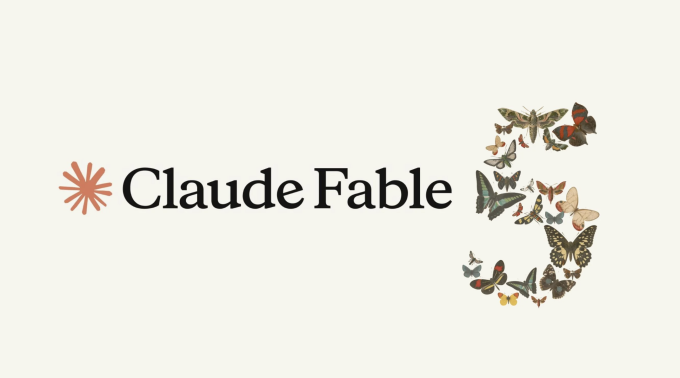
Logo Claude Fable 5. Image: Anthropic
According to Anthropic, when using Fable 5, users are directed to the Opus 4.8 model for certain topics, including requests related to cybersecurity, biology, and chemistry. The new AI also prevents “distillation” from competitors. Earlier this year, the company accused three Chinese companies—DeepSeek, Moonshot, and MiniMax—of creating 24,000 fake accounts to “distill” its Claude AI data.
In the AI community, the term “distillation” refers to the “transfer of knowledge” from one model to another, similar to a teacher-student relationship. “Distillation is a technique designed to transfer the knowledge of a pre-trained large model (the teacher) into a smaller model (the student), allowing the student model to achieve performance comparable to the teacher model,” scientists Vishal Yadav and Nikhil Pandey told Forbes. “This technique helps leverage the quality of large language models (LLMs) while reducing inference costs.”
Anthropic stated that Fable 5 is currently available to all users subscribed to the Pro and Max packages, as well as group and enterprise packages. However, broad access will not last long, as stricter limits will be implemented starting June 23.
Meanwhile, Claude Mythos 5 was initially deployed through the Glasswing Project in collaboration with the US government as an upgrade to Claude Mythos Preview. According to Anthropic, this AI has “the strongest cybersecurity capabilities compared to any model in the world.” The company also plans to open access to Mythos 5 through a separate program, though details were not disclosed.
Google Gemini 3.5 Live Translate for Real-Time Translation
On the same day, June 9, Google announced Gemini 3.5 Live Translate, allowing for real-time voice translation. While older models required phones, Pixel headphones, or dedicated devices, the new AI supports access to high-speed translation features across more devices, “with lower latency than ever before.”

Real-time translation capability on Gemini 3.5 Live Translate. Video: Google
Google stated that Gemini 3.5 Live Translate is “fast enough to keep up with a casual conversation, only a few seconds slower than the speaker, while matching tone, speed, and pitch.” The voice also sounds “more human-like,” while the noise filtering ability in noisy environments has been upgraded compared to the previous version.
The tool is being rolled out by Google across multiple services in its ecosystem, starting with Google Meet, and will soon be available on Google Translate for Android and iOS. Developers can now start building applications with the public preview in Gemini Live API or AI Studio, featuring support for real-time voice processing, automatic recognition, and handling of multilingual input without manual configuration. The system also has the ability to reduce noise from the environment to maintain translation quality in noisy conditions.
Apple with Foundation Model
At the WWDC 2026 Developer Conference held on June 8, Apple introduced its third-generation Apple Foundation Model (AFM).

Apple representatives introduced the third-generation Apple Foundation Model. Image: Tuấn Hưng
Amar Subramanya, Vice President of AI at Apple, stated that AFM consists of two models that operate directly on devices and three models on servers. The device-based group includes AFM Core, which uses dense architecture, and AFM Core Advanced, which employs sparse architecture and is natively multimodal. According to him, AFM Core Advanced “is completely different from any model on devices that the company has ever deployed,” allowing for the addition of new features, including interaction requests and expressive voice without needing to send commands to the server.
Apple also developed cloud-based models, including AFM Cloud, optimized for low latency and cost, and AFM Cloud Image, which supports image creation and editing, such as Apple Intelligence’s new framing feature.
According to Subramanya, these four models were “crafted specifically for Apple Silicon chips, trained on proprietary data using reinforcement learning methods and fine-tuned using output results from Gemini’s pioneering model.” Google’s contributions are based on Apple’s distillation rather than applying the entire Gemini as rumored.
Apple’s fifth and most powerful model is AFM Cloud Pro, designed for AI agents and complex inference tasks, with quality that Subramanya claims is “comparable to the most advanced Gemini models.” The model also marks a turning point with Apple’s private cloud computing service, Private Cloud Compute.
Siri AI is built on the AFM model, with native multimodal capabilities, trained from the ground up to understand, process, and simultaneously integrate multiple types of data, including text, images, audio, and video.
Upgrades from Chinese AI Companies
Chinese companies are also making several model upgrades. Among them, Alibaba released the Qwen3 Coder Next update on June 10, adding advanced programming capabilities. This model was launched in February and is trained on a vast amount of multilingual source code and technical documentation, enabling it to handle popular programming languages such as Python, Java, JavaScript, C++, Go, and Rust.
According to Alibaba, the model is optimized for AI agents in software development, capable of performing a sequence of actions including reading requests, analyzing existing code, proposing changes, and generating new code. The system is also designed to work with large context windows, allowing it to handle projects with thousands of lines of code.
Similarly, MiniMax’s M2.5 Highspeed model was also launched in February and recently added several features on June 10. Also known as M2.5 Lightning, this open-source AI is optimized for programming tasks, AI agents, search, and office work, focusing on high inference speed and low cost.
MiniMax M2.5 uses a Mixture-of-Experts (MoE) architecture with around 229-230 billion parameters total, but only 10 billion parameters are activated during each inference. A highlight is its processing speed, achieving around 100 tokens per second, nearly double that of many leading AIs.
Bảo Lâm compiled this information.