
“You need to give them identity, have their own ‘playground’, and then establish management policies like a real employee,” Nadella told host Reid Hoffman on the Possible Podcast over the weekend. “We are exploring tools and policies that can be applied to this ’employee’, such as granting them specific permissions regarding what they can and cannot access, as well as how to ensure safe work practices.”
According to him, like other businesses in the AI trend, Microsoft is also investing heavily in artificial intelligence while looking for ways to make AI agents work effectively alongside humans.
However, figuring out how to manage them is “particularly challenging.” The Microsoft CEO shared that he can operate 100 AI programming agents simultaneously, but guiding each agent through a chat interface is not easy. “The cognitive load for me in managing this is very high,” Nadella said.
He also mentioned that the company currently operates Agent 36, a toolkit that includes Entra – a digital identity and network access product, and Purview – a data labeling system created by AI agents. “I think security capabilities, issues of control, management, and oversight will be the factors we can trust regarding artificial intelligence agents when operating a business,” the Microsoft CEO added.

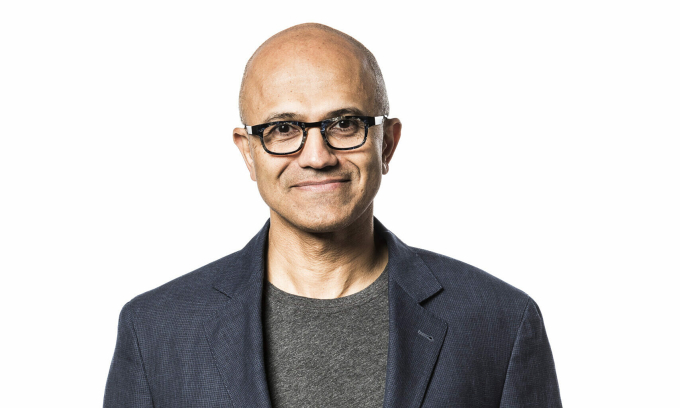
Microsoft CEO Satya Nadella. Photo: Microsoft
Microsoft CEO Satya Nadella. Photo: Microsoft
Microsoft introduced an AI agent named Scout at the Build event on June 2. The tool is built on the power and flexibility of OpenClaw, operates on a cloud platform, and is compatible with desktops and web browsers. Users can connect with their inbox, calendar, and other systems on their computers, as well as access the Microsoft 365 ecosystem for managing schedules, drafting meeting agendas, and many other functions. However, according to documents collected by 404Media, Microsoft has plans to make users “addicted” to this agent.
Nadella’s remarks come as major companies such as Nvidia, Microsoft, and Google race to develop new technologies that allow computers to use AI agents to replace humans in complex tasks. Among them, Nvidia and Microsoft are enhancing Windows and integrating RTX Spark chips to achieve this goal, while Google is set to release Googlebooks with the ability to suggest actions when users hover over a spot on the screen.
Analyst Neil Shah, co-founder of market research firm Counterpoint Research, predicts that Nvidia’s direction in developing self-processing AI computing will revolutionize computing in the next decade.
However, according to Business Insider, the rapid development of autonomous AI also raises concerns. On June 4, Anthropic called on top AI developers to establish a coordination mechanism to slow down or stop the development process if AI begins to self-improve at a pace that exceeds society’s risk management capabilities. This startup believes that AI with self-improvement capabilities will be a significant advancement in the history of technology but also increases the risk of humans losing control over artificial intelligence.
Bảo Lâm compiled
The race to develop AI computers to work instead of humans
Microsoft releases an autonomous agent similar to OpenClaw
‘AI is just an excuse to lay off employees’
Meta employees oppose being monitored for mouse and keyboard activity
Anthropic teaches AI agents how to ‘dream’
The race to develop AI computers to work instead of humans
Microsoft releases an autonomous agent similar to OpenClaw
‘AI is just an excuse to lay off employees’
Meta employees oppose being monitored for mouse and keyboard activity
Anthropic teaches AI agents how to ‘dream’