
At the end of May, the Ministry of Science and Technology confirmed the decision of the Intellectual Property Office to reject Apple’s trademark ‘Retina HD’, used for the screen technology on certain iPhone models.
The issue originated from a notification in 2016 from the Intellectual Property Office regarding the temporary rejection of Apple’s trademark ‘Retina HD’, according to international registration 1255479. This agency stated that ‘Retina HD’ was similar enough to cause confusion with the trademark ‘Retina’ previously registered by Kodak. The element ‘HD’ was deemed to be simple letters that did not create distinctive capability.
Disagreeing with the outcome at that time, Apple filed complaints twice in October 2016 and August 2025 to the Ministry of Science and Technology. The company argued that ‘Retina HD’ did not cause confusion despite the name overlap, as the products had clear differences in purpose, function, and target customers. Apple also referenced a letter of approval from Kodak, in which the owner committed not to oppose and allowed the registration and use of ‘Retina’ for certain products in Vietnam.

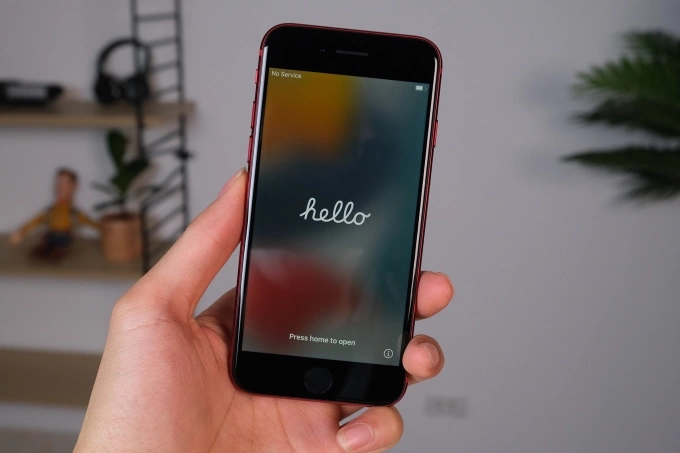
The third-generation iPhone SE uses a Retina HD display. Photo: Quang Dong
After verification, the Ministry of Science and Technology determined that the information provided by Apple was insufficient to distinguish ‘Retina HD’ from ‘Retina’. The approval letter from Kodak, provided by the complainant, was also created for a different case. Therefore, the Intellectual Property Office’s rejection of the ‘Retina HD’ trademark was justified.
During the dialogue process, the Office maintained its stance that Apple’s ‘Retina HD’ trademark lacked significant differentiation in structure, pronunciation, meaning, and overall visual impression. The registered/protected goods for both trademarks are fundamentally similar, being devices, means, or technical products that may overlap in data processing, display, transmission of images, and information. Due to the common components of both trademarks, consumers could assume that the products share the same commercial origin or have a connection.
After discussions and evaluations of the circumstances, information, and related documents, the parties agreed to resolve the matter by not accepting Apple’s complaint.
Earlier, in April, the Ministry of Science and Technology also rejected Apple’s complaint regarding the trademark ‘Live Photos’, following the Intellectual Property Office’s refusal to grant protection. Apple has not commented on either case.
‘The challenge with intellectual property is whether the market accepts the valuation’
‘Selling voice’ to teach AI
The profession of ‘software installation on the go’ is becoming obsolete.
‘The challenge with intellectual property is whether the market accepts the valuation’
‘Selling voice’ to teach AI
The profession of ‘software installation on the go’ is becoming obsolete.